This is 's personal link for their people. The whole Vault, every script and sequence behind the 40 percent reply rate, free and yours to keep.
Aly Samaha · free · yours to keep
The Follow-Up Vault
Every message, rule, and script I use to keep deals alive and bring the stalled ones back. Not a sample. The whole thing.
I was never the fastest talker in the room. I just refused to leave earned business sitting in the inbox, because most people quit the follow-up right before the money finally answers.
The sequence in this vault pulled about a 40% reply rate when 20 closers ran it for an eight-figure team. That was the record for that company. That's what you're holding.
★ The 8-figure sales team
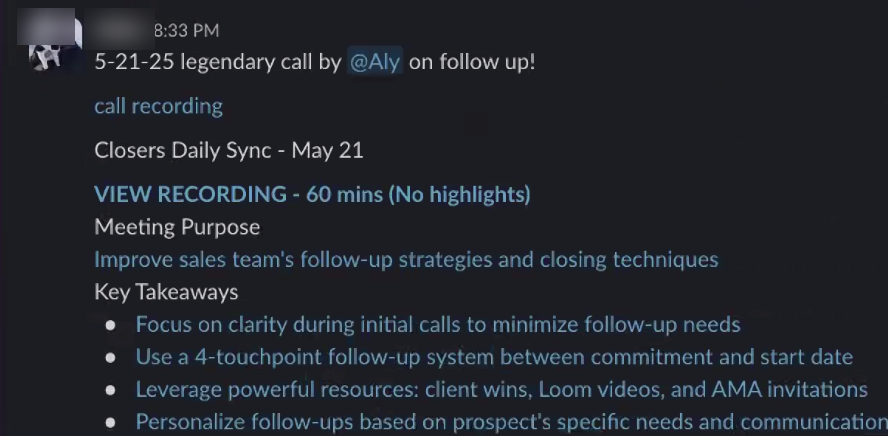
An 8-figure sales team called my follow-up legendary. Not a testimonial I asked for, just what they said when I wasn't in the room.
★ The cover story
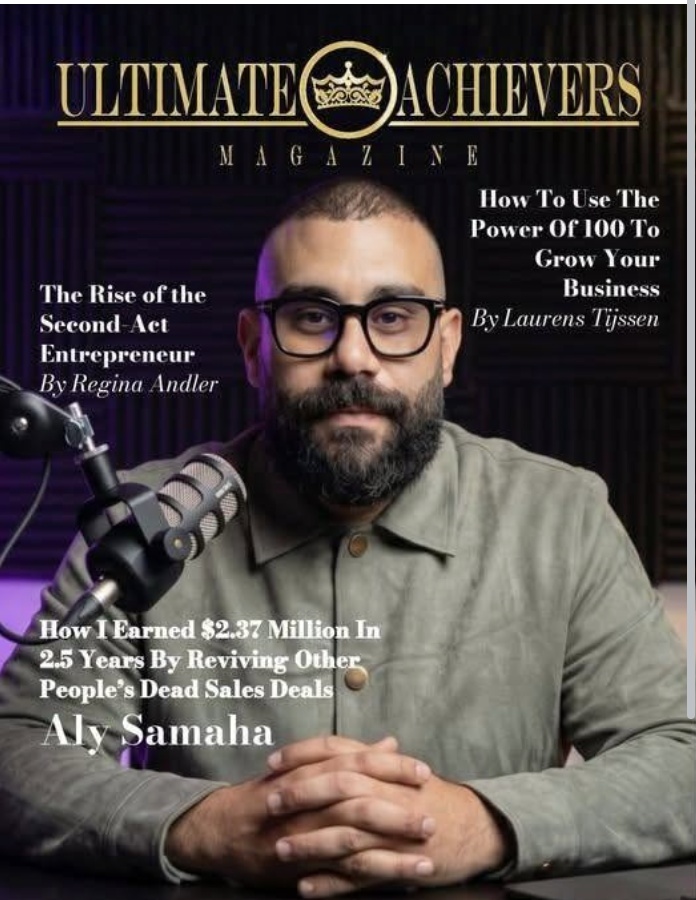
Cover story, Ultimate Achievers Magazine, Issue #100. Same system, different receipt.
★ The receipts
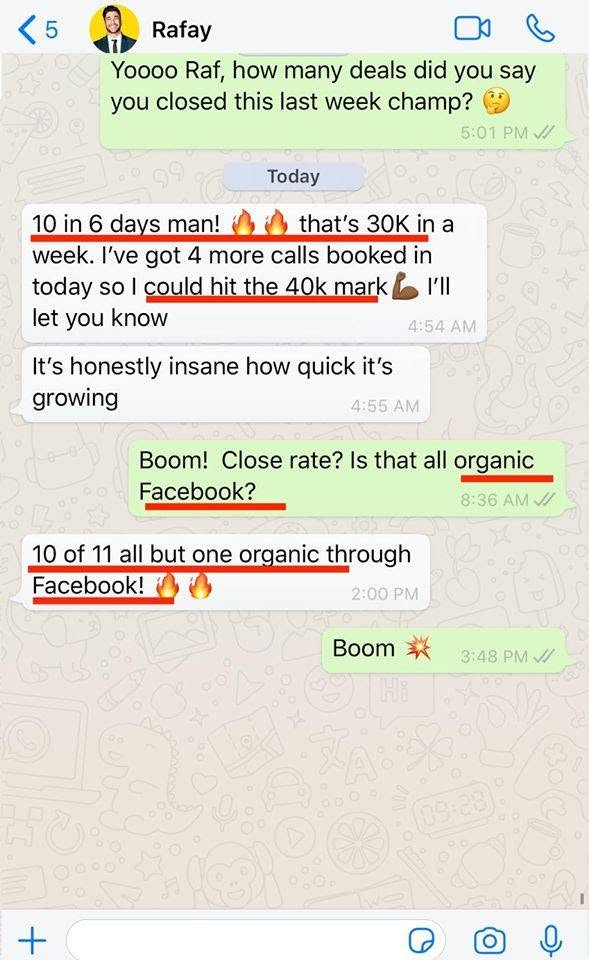
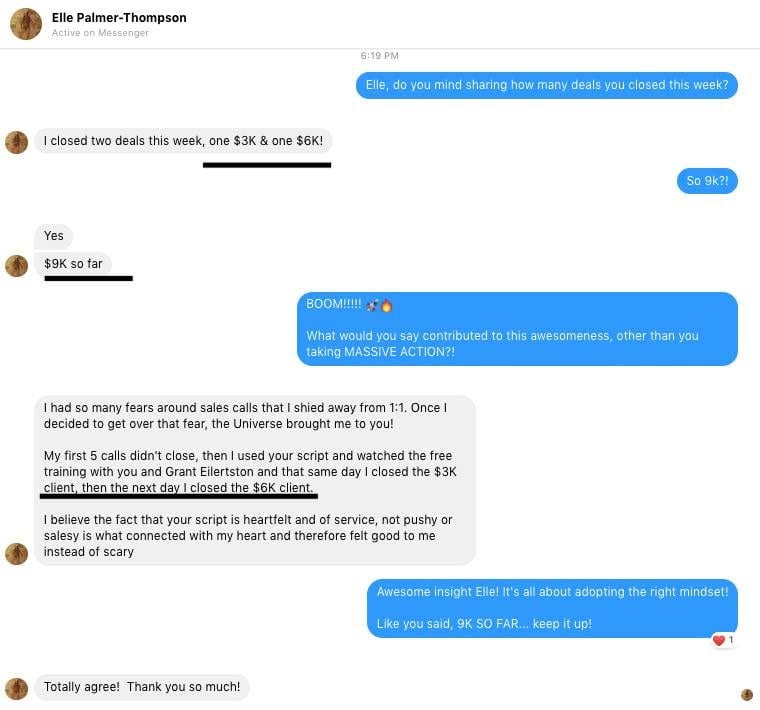
Rafay, $30K in one week
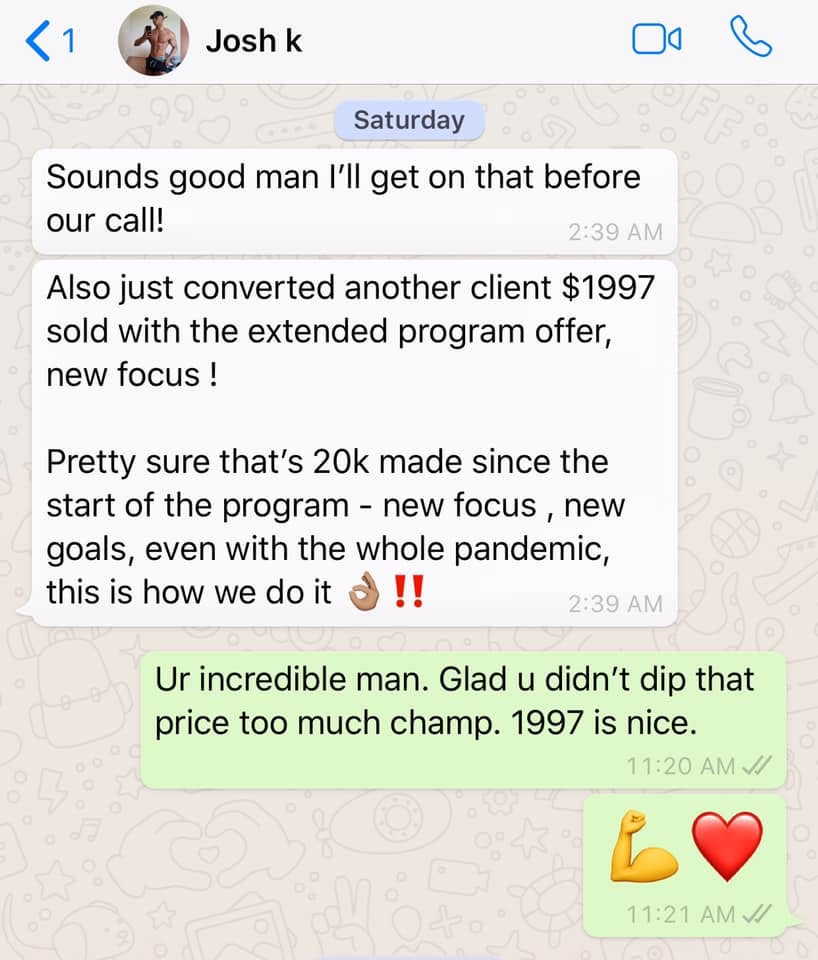
Josh, ~$20K
Elle, $9K in one week
Closers inside high ticket offers, using these exact messages.
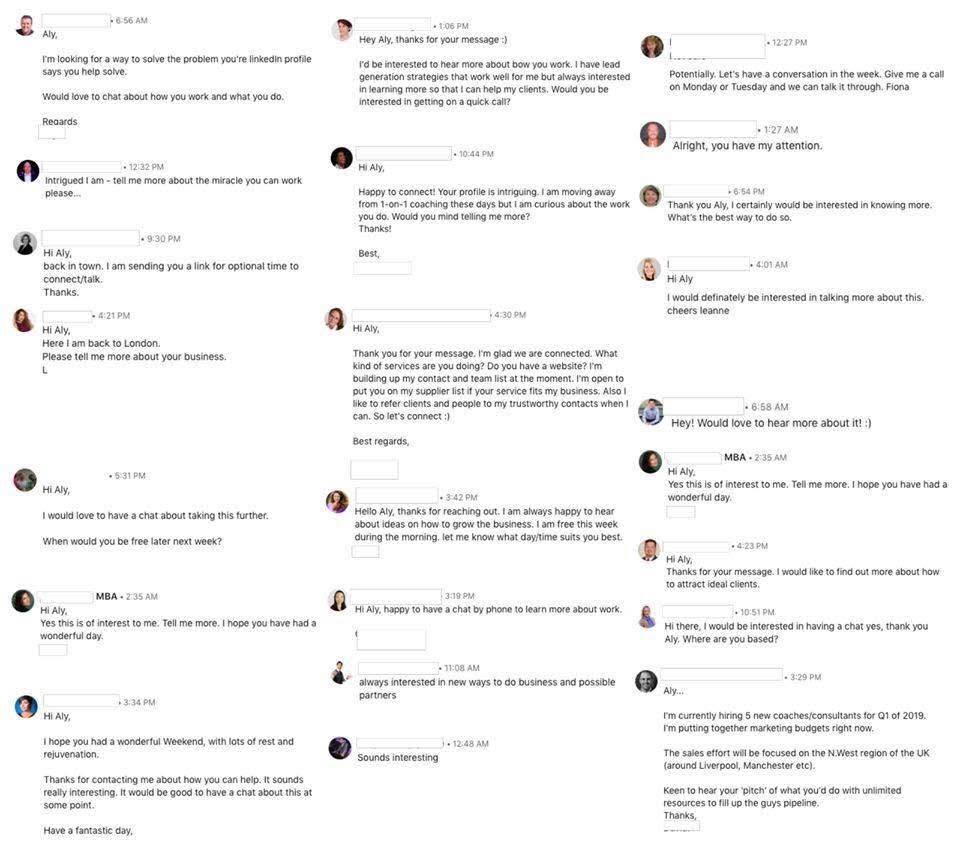
★ The dream: a full inbox
One week of inbox. Every one of those replies came off a list somebody else had already given up on. A single week of warm inbound, from the kind of leads most people stop working.
Start here
The math nobody respects
Start with your own number. Take the deals that stalled in the last ninety days. Multiply by your average deal value. That figure is already paid for. You spent the money to acquire it whether it closes or not.
Here's the bit that costs you. Whatever you pay to replace those buyers keeps climbing, every year, in every ad account. The cost to recover the ones you already have stays at zero. That gap widens every year you ignore it.
Most people send one follow-up. Maybe two. Then they quit and go chase a cold stranger instead.
But the reply almost never lives at touch one or two. It lives at four or five, right past the point where everyone else gave up. That gap, between where you stop and where the money actually answers, is the most expensive thing in your business. It's full of deals you already paid to create, sitting one message away from alive.
You've got messages like that sitting in your own pipeline: the "let me think about it" replies, the no-shows, the ones who bought once and vanished. You just stopped reaching for them.
And it's not a small pile. Every lead you paid for that never bought is still paid for, whether anyone goes back for them or not. A brand new lead costs more every year. The cheapest revenue you'll touch in the next twelve months is the one already sitting in your CRM, waiting for the right message.
So the job is simple. Close what you can on the call. Then go back for the rest.
You get clarity and a commitment on the call so you don't have to chase. And for the ones who still stall, you've got this. Everything below is built to do one job: get a stalled deal moving again and turn it into revenue, without new ad spend, without being weird about it.
Do this in the next 10 minutes
Two messages. That's most of it, honestly.
Don't read the whole thing first. Open your CRM, pick one deal that stalled, and send this before you close the tab:
1. The 4-second question: "Hey [name], are you still looking to [their goal, e.g. land more clients / fix your follow-up / grow the business]?"
2. If they stay quiet, the honest close: "Hey [name], I don't want to keep filling up your inbox if the timing's just off. Want me to check back in a few months instead?"
That second one does the heavy lifting. In my experience that’s the one that gets a reply when nothing else has. Giving someone a real, low-pressure exit gets an answer when a pitch won't. Now read the rest and build the machine around those two.
This is what got me the highest cash collected per scheduled call on every sales floor I’ve worked, most of it from follow-up: deals kept alive, and deals brought back after they stalled.
The Re-Open Sequence, the 4 messages that restart a stalled deal.
The Follow-Up Swipe Vault, 33 copy-paste lines for every stall.
The DAC objection scripts, word for word for the 7 stalls that kill deals.
The Deferral Templates, 5 types with a primary and a bump.
What to Send When, the one-page decision tree.
The Pipeline Tracker.
It’s free because one restarted conversation pays for it a hundred times over. Read it once end to end, then keep the swipe vault and the tracker open beside your pipeline and start sending.
The foundation
The 3 rules behind every message
A deal doesn't stall because the person hates you. It stalls because a message made them feel one of three things: stupid, trapped, or pushed. Keep every message inside these three and almost nothing hurts the deal.
1
SMART
Never talk down, never send anything over their head or that makes them feel behind.
2
FREE
Always give the out. "No wrong answer." "Totally fine if not."
3
IN CONTROL
They choose the next step. You isolate and solve their obstacle, not push yours.
Break one and you get silence. Hold all three and the close takes care of itself.
The rest of the Vault, and your number
Two numbers and one line open all seven tools. Inside a day, I write back with what your quiet pipeline is worth.
Below this line: the four message Re-Open Sequence that pulled a 40 percent reply rate on four thousand dead conversations, 33 swipe lines, the objection scripts for the seven ways people stall, the deferral templates, the one page decision tree, the mindset piece and the pipeline tracker. Every script I run. They open the moment you send this, and they're yours to keep.
The two numbers are so what comes back is about your business. Inside a day I write back, by hand, with what your own quiet pipeline is worth at my record rates and the first message I'd send to reopen them. Free, no call, nothing held back for a paid version.
The numbers, what you sell, and your email, please. The message I write back is only as good as what goes in.
Still free. Nothing is held back for a paid version. The two numbers are so the answer you get back is about your business, not a generic one.
1 of 7
The Re-Open Sequence
Four messages, sent 2 to 4 days apart. Works on email and text, run both with the same words. The whole thing reads in under a minute on their end, because every message is answerable in one line, from a phone, in four seconds.
1. The re-open
send first. reopen the conversation, not the sale.
Hey [name], are you still looking to [their goal, land more clients / fix your follow-up / grow the business]?
No recap. No link. No pitch. A question about their goal gets a reply. A paragraph about your offer gets ignored.
2. A reason to move now
a day or two later, or after a flicker of life.
Not sure you saw my last note. We just opened [a genuine, true reason, a few spots / a window / a price] for [the outcome] over the next [timeframe]. Want me to send the details?
A real reason it's timely, and a tiny ask that costs them nothing to say yes to. "Not sure you saw" is the non-assumptive seed.
3. Show, don't argue
when you want proof to do the work instead of words.
[Name], check this out: [a screenshot, a result, a testimonial, a win]. This could be you, but I haven't heard back. What should we do?
Stop convincing. Show one piece of proof, then hand them the wheel. A decision you make together, not pressure you apply. A screenshot beats a video, it's instant to absorb.
4. The honest close
after genuine silence. this one restarts more than anything.
Hey [name], I don't want to keep filling up your inbox if the timing's just off. Want me to check back in a few months instead?
Give them a real, low-pressure way out instead of applying more pressure. Nobody argues with an exit. That's why they answer it.
Personalize the brackets. Unscalable beats scalable on anyone hot or warm. If they never text back, call, then voice-note, then a short "tried you, have a listen." Automate only the truly cold, roughly a month dark.
Don't just read this
How much is this worth in your business?
Everyone who enquired, booked a call, applied or asked you for a proposal in the last twelve months and never bought is still sitting in your CRM. You already paid for every one of them. Two numbers and one line, free, no call. Inside a day I tell you roughly what your quiet pipeline is worth, whether it's worth working at all, and the first message I'd send to reopen them. If the answer is nothing, I say so and that's the end of it.
The number you send doesn't matter. What matters is who gets the ones you sat down and wrote yourself. Segment your pipeline daily and put 80% of your personal, unscalable energy where the money actually is.
The segments
Hot: verbal commitment, a deposit down, or one logistical thing left. Closable in 1 to 2 weeks. Almost all of your personal attention goes here.
Warm: engaged, no commitment yet. Light, personal touches.
Cold: long out or unresponsive, roughly a month dark. Touches only. Automation lives here, and only here.
The 4 touch-points
Between the commitment and the date you agreed to start, run four spaced touches, never daily spam. Minimum every other day, tighten as the start date nears, never compress all four at the front.
A fresh client-win clip (the same one works for everyone, it's specific enough to land).
An invite to meet you or the expert live (the invite alone kills an objection, even if they don't attend).
A proof screenshot matched to their exact obstacle.
One personalized piece tied to the single thing blocking them.
Channel rule: if they won't answer texts but open them, call. No answer, voice-note, then a short SMS "tried you, have a listen."
3 of 7
The Follow-Up Swipe Vault, 33 lines
A copy-paste line for every stall. Fill the brackets. The codes map to the Tracker, so you can log which line you sent.
A. The re-open (a deal stalls out)
A1[Name], thought of you today, no agenda. Last we spoke you were on [goal]. Where'd that land?
A2Not sure if the timing shifted on [goal], but you've been on my mind. Still something you want to solve this quarter?
A3Quick one: are you still the right person on [project], or did it move to someone else?
A4[Name], said I'd come back to this and here I am. No pressure, I just didn't want it sitting in a drawer if it still matters to you.
A5Hey [Name], should I keep this on my radar, or has [goal] moved to the back burner for now? Either's totally fine.
B. Post-proposal / post-pitch silence
B6[Name], sent over [the proposal] on [day]. Not chasing, just want to make sure it landed and didn't get buried. Any first reactions?
B7Two quick questions on the proposal: is the scope right, and is the timing right? If both are close, the rest is easy.
B8I'd rather know than wonder, is the [proposal] a "not now," a "not quite," or a "yes, just busy"? I'll meet you wherever you are.
B9No rush on [proposal], but if there's one thing making you hesitate, tell me and I'll address it head-on.
C. The price / budget stall
C10Totally fair if budget's the question. Quick check: if the investment worked, is this a 100% yes? If so, let's talk options.
C11[Name], is it the price, or the certainty it'll pay off? Those are different problems and I can help with both.
C12Let's not let money be the only reason a [outcome] you want doesn't happen. Want me to walk through what's possible?
C13One recovered [client/deal] covers this many times over. Want me to show you the math on your numbers?
D. The "think about it"
D14Of course, what specifically do you want to think through? Tell me and I'll get you exactly what you need to decide.
D15When people say "let me think," it's usually one of three things: timing, money, or "will it actually work." Which is it for you? No wrong answer.
D16Happy to give you space. Want me to check back [day], or would you rather reach out when you're ready?
E. The spouse / partner / decision-maker
E17Makes total sense to loop in [partner/team]. Want me to send a short recap the two of you can review together? Zero pressure.
E18Mind sharing [partner]'s email? I'll send a 2-min walkthrough of your goals + how this helps, and they can ask me anything directly.
E19I find it's easier when [partner] hears it from the source. Open to a quick 3-way call so nothing gets lost in translation?
F. They stopped replying altogether
F20[Name], tried you a couple ways. I'll assume life got busy (it happens). Want me to keep your spot, or should I close it out?
F21Last one from me so I'm not cluttering your inbox: door's open whenever. And if it's a no, totally fine, I'd just rather know.
F22I'll take the silence as "not now" and stop here. If that's wrong, one word and I'm back. Rooting for you either way.
F23Sent you a quick voice note, easier than typing. Have a listen and tell me where you're at?
G. "You asked for something, then stopped replying" (reciprocity)
G24[Name], [day] you asked me for [the thing]; it was handled within [time]. Everything's exactly as we discussed. Hope we're not making something simple, complex, unless I'm missing something?
G25Delivered [what they asked] as promised. Anything else you need from me before we move to [next step]?
G26You asked, I delivered, fast. Now the ball's in your court, what's the one thing standing between you and yes?
H. Logistics / "I can't right now"
H27Totally get it, what's the actual blocker? If it's logistics, I'll basically be your support person and we'll knock it out together.
H28Let's not let a [paperwork/scheduling/setup] thing stall a decision you've already made. Walk me through it and I'll handle my part.
I. Speed / timely touch (use sparingly, casual)
I29Saw this and instantly thought of you, [relevant win/resource]. Same situation you mentioned. Useful?
I30Had a tiny gap between calls and wanted to fire this over while it's fresh: [quick value]. More where that came from.
J. The close / finish line
J31About to wrap my day, anything you need from me before I sign off? Want to make sure you're all set for [next step].
J32Let's get you in. Send me [the one thing] and I'll take care of the rest today.
J33Reserved your spot till [day]. After that I open it up. Want me to hold it?
4 of 7
DAC: how to handle any objection
When somebody objects they're usually not turning you down. They're telling you the one thing they're stuck on. It's almost always a variation of one thing: uncertainty, money, logistics, a partner, or "let me think." You don't overcome it, you solve it together. That's DAC.
The meta-move first, before any script: mirror, recap, and don't move on until it's fully resolved.
"So what I'm hearing is [their exact words]. Did I get that right?" (Let them say "exactly." Then proceed.)
D · Diffuse
Take the pressure off both sides and find the real meaning. Don't "acknowledge," get curious.
"Not a problem. When you say [repeat their words], what do you mean by that?"
A · Agree
Don't jump back into facts and benefits, that flips them into defense. Move them from a no-state to a yes-state, and make them defend the yes.
"If you did have the money, do you feel this gets you where you want to go?" then "Why do you feel it would?"
C · Collaborate
Don't "overcome," solve it with them. The answer they build themselves is the one they keep.
"How do you think you can resolve that so you CAN [get the outcome]?"
DAC applied to the 7 stalls that kill deals
Swipe sideways on the table if you're on a phone.
The stall
What you say
"It's too expensive"
"Totally fair. Quick question so I point you right: if the money weren't the issue, is this a 100% yes? Then it's not really a price problem, it's a certainty-it'll-pay-off problem, and that I can help with. One recovered [client/deal] is worth [$X]. This is [$price]. Want me to walk the math on your numbers, or look at options to make it work?"
"I need to think about it"
"Of course, and to make sure your thinking is productive, what's the ONE thing you'd be turning over? Usually it's timing, money, or 'will it actually work.' Whichever it is, I'd rather hand you exactly what you need than have you guess in a vacuum."
"I need to talk to my [spouse/partner/team]"
"Smart, a decision like this should include [them]. Mind if I send the two of you a quick recap plus a 2-minute walkthrough of your goals and how this helps? That way [they] hear it with full context, and can ask me anything directly. What's the best email?"
"I'm not sure it'll work for me"
"That's the most important thing to be sure of, so let's not skip it. On a 0 to 10, how confident are you that [the outcome] is even the right path for you? [If under 7] then before anything else, let me get you [a resource/proof] from someone who started exactly where you are. Certainty first, decision second."
"Now's not a good time"
"Heard. Is it genuinely a timing thing, you're slammed for [period], or is timing the polite version of money or certainty? No wrong answer, I just want to solve the real one. And if it's truly timing, let's at least lock the plan so when the window opens, you move, not start from scratch."
"Just send me some info"
"Happy to, and so I don't dump a generic packet on you, what's the ONE thing that, if it checked out, would make this a yes? I'll send exactly that, not the kitchen sink."
"Let me get back to you" (then silence)
"[Name], [day] you asked me for [the thing]; it was handled within [time]. Everything's spelled out and exactly as we discussed. Hope we're not making something simple, complex here, unless I'm missing something? If it's a no, totally fine, I'd just rather know."
Every one of these holds the 3 rules: smart, free, in control. You isolate the ONE real obstacle and solve only that. Never handle an objection you invented.
5 of 7
Deferral templates: when they say "later"
Reusable scripts for the five ways a deal defers. SMS-first, warm, no pressure. One job: reopen the conversation and lift the specific stall. The message reopens. The close happens live. Never put a number, a plan, or a card request in writing.
Type 1. The verbal yes, then silence
life interrupted, travel or family.
Primary: "Hope [the trip / things] settled down. Whenever you're ready, I'll get you onboarded and moving. Want the link to lock it in, or easier to do it live for 10?"
Bump: "No rush, just keeping your spot warm. The sooner we start, the sooner [the outcome] is on the calendar. Say the word."
Type 2. The price-stretch deferral
fit is clearly there, money is the friction.
Primary: "Still holding our time. No pressure either way, I just don't want logistics to be the thing in your way when the fit is obvious. If it helps, I can walk you through a couple ways to make the investment land easier."
Bump: "Totally fine if the timing's not right yet, I'd rather you start when it feels clean than be talked into it. Door's open. Where's your head at?"
Type 3. The deposit-down, balance pending
they committed, the money is in motion.
Primary: "You said it yourself, it's time. Whenever [the transfer] clears, send it over and I'll lock everything in. I want to get you moving while the fire's lit."
Bump: "Still holding your spot and the offer. No hurry, just don't want you on the sidelines when you've got something people need. Ping me when you're ready."
Type 4. The timing / runway blocker
it's the buyer's life-math, not the offer.
Primary: "Still on for [the call], and your [discount/spot]'s held till then. When we talk I'll bring the math so the money side is concrete, not a leap. The fit's not in question, let's just make the timing work for where you actually are."
Bump: "If [the time] moved on you, no problem, give me a window. I'd rather get the numbers right with you than have you guess. Holding it either way."
Type 5. The "let me think over the weekend" leaner
objections already handled on the call.
Primary: "Take the weekend, no pressure. Just remember the thing that matters: [the one-line reframe that lands their core fear]. Whenever you're ready, [your hold]'s locked and I'll get you straight onto your plan."
Bump: "Still here, still holding everything. If anything's still nagging at you, send it my way, I'd rather answer it than have you sit with it. No rush."
6 of 7
What to send when
A lead stalls. Ask one question first: what's the real obstacle? Every stall is one of these. Match it, then send.
Swipe sideways on the table if you're on a phone.
If the obstacle is
The real fear
Send this
Swipe
Certainty ("will it work?")
They don't believe the outcome
Client-win screenshot + relevant testimonial
A1-A2, I29
Money ("too expensive")
Value perceived is below price
Isolate price-vs-certainty + ROI on their numbers
C10-C13
Someone else (spouse/team)
Can't decide alone
Recap email + walkthrough, invite the other person
E17-E19
Themselves ("am I capable?")
Self-doubt
A "someone like you" success story
A2, I29
Logistics (setup/paperwork)
Friction, not desire
Become their support person, do it with them
H27-H28
Timing ("not now")
Low urgency or a real constraint
Challenge gently, compress to one month or less
A5, D16
The 3 power resources, if you do nothing else
A fresh client-win video (universal, non-salesy).
An invite to meet you or the expert live (reframes you as transparent and high-authority).
Testimonial screenshots (one second to absorb, people are busy).
7 of 7
The mindset that makes it work
The scripts are the easy part. These are the settings underneath them.
They can smell desperation, and they can smell certainty. This is a long game. You're building something with someone, and that takes more than one message. If someone comes to you in a rush or a panic, it's fine to say "go handle that first, then come back." Non-neediness is the most attractive thing you carry into a follow-up.
Speed is trust. Answering fast, delivering fast, and showing proof fast is what turns a "maybe next month" into "let's start now." Speed of delivery converts more than any clever line.
Isolate the ONE obstacle. You can't follow up well without knowing the single real blocker. When in doubt, ask: "Is it a timing thing, a money thing, or a 'need to be sure it'll work' thing?" Then solve only that.
Plant non-assumptive seeds. "Not sure if this is for you," "no pressure either way," "don't know if the timing's right." These give the person permission to say yes. They reinforce the "free" rule and they reliably lift replies.
Use the 0 to 10. "On a 0 to 10, how sure are you this is the right path?" Their own number becomes the foundation. An 8 means what's left is nerves, and nerves aren't a reason. Under a 7 means send proof before you ask for anything.
A clean no is a win. The stalled deals you keep half-working are the most expensive thing in your pipeline. Get the yes or the no, then move your energy to where the money actually is.
Bonus
The Pipeline Tracker
One row per stalled deal. Log the obstacle, the next touch, and the swipe code you sent. This is how you make sure nothing quietly dies again.
Swipe sideways on the table if you're on a phone.
Lead
Deal value
Hot/Warm/Cold
The ONE obstacle
Next touch
Touch # (of 4)
Next message (swipe #)
Outcome
Jane, Acme Co
$8,000
Hot
Certainty
2 days out
2 of 4
A2 (client-win)
Open
Mike
$3,000
Warm
Spouse
4 days out
1 of 4
E18 (recap + walkthrough)
Open
You get this as an editable sheet. Two example rows above, delete them and drop your own stalled deals in.
Before you close this
One thing before you go
That's the whole system. Take it, use it, change whatever doesn't fit how you sell. Nothing is held back for a paid version.
One thing worth saying now that you've read it. Every script in here works on people who already raised a hand and never bought. Most owners think that pile is forty people. It's usually four hundred, and the ad spend that created every one of them is already paid for.
If you want to know how big yours is, that's two numbers and one line, free. Inside a day I write back with how many of those people you have, what your quiet pipeline is worth, and the first message I'd send to reopen them. If there's nothing there, I say so and that's the end of it. That's a useful answer too.